Our team.
Four careers from engineering, management consulting, IT transformation and process management. Different focuses, overlapping strengths: together they cover the full range of what we do.
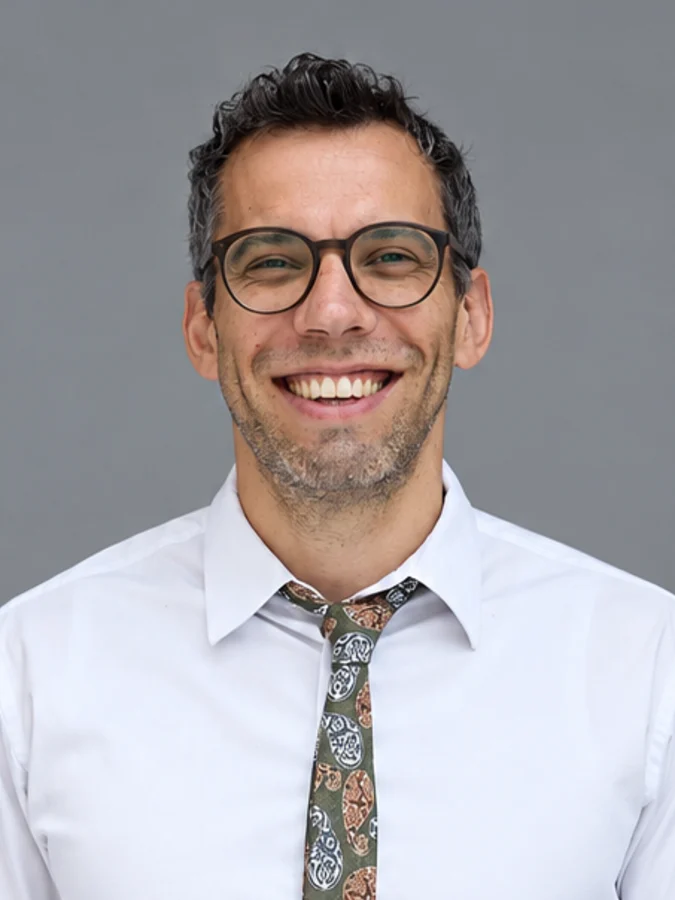
Matthias Sammer
Strategy, AI and data systems, business models, regulation and operations
Matthias works where AI and data problems fail not on technology, but on translation – between strategy and system, between regulation and operations, between business model and what the system actually does.
Before Kernity he built systems in domains that rarely come together in one person: TLTRO-III risk reporting for an Austrian bank, satellite-based climate intelligence for public authorities (GeoVille), an award-winning forest traceability concept (Galileo & Copernicus Masters), an AI data layer for the European sustainable-finance market (LuLarge). At GeoVille he led the conception of new products and business models in the earth-observation market as Business Innovation Manager. At Beetle ForTech he combined the roles of Co-Founder, CTO and CFO – strategic direction, technical delivery and financial steering in one hand.
Academically he connects three fields that usually stay separate: Economics (Unversity of Innsbruck), a Master in Data Science (HOK Kufstein) and a Master in Behavioral Science (University of Stirling). That explains why translation between business, system and behaviour is not a slogan.
What this means for you
Matthias builds with your team, not for your team. He understands regulated industries, messy data, and the difference between a demo and a system that holds up in an audit. For AI or data initiatives where strategy, business model, compliance and operational readiness must be thought together, he is the natural partner inside the core team.
Full spectrum
From the business-model question through regulatory detail to the data pipeline in production – with academic depth and a hand on the code.
„Data problems rarely fail on technology. They fail in translation – between IT and business, between regulation and operations, between strategic intent and what the system actually does."
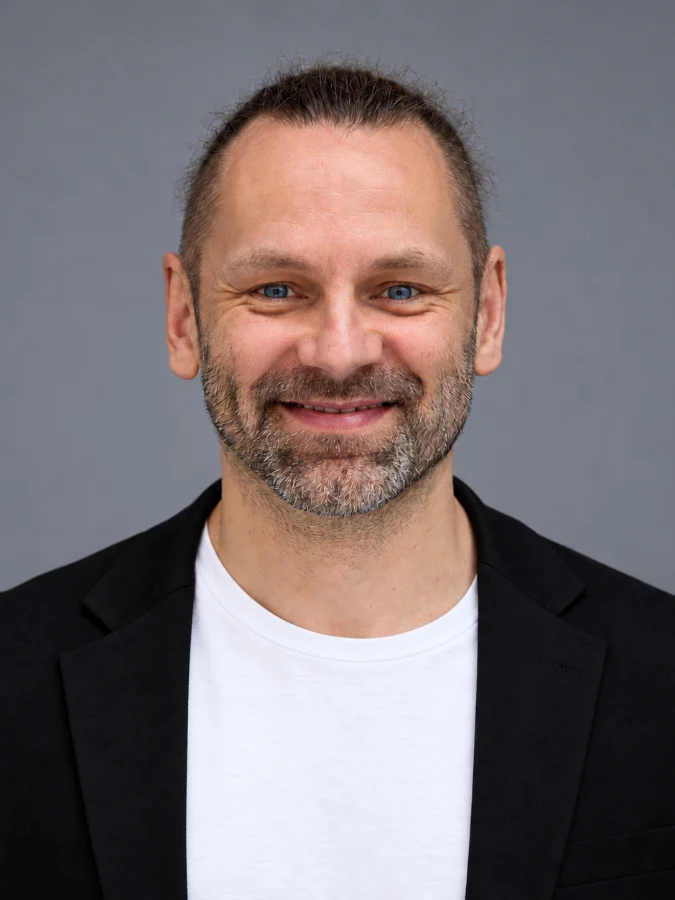
Martin Wieser
Technology leadership, architecture, engineering and production
Martin combines three decades of engineering depth with tech-leadership experience at board level. As CTO of an enterprise platform for international travel management since 2009 he knows the reality of long-lived systems: legacy integration, stakeholder alignment, incomplete data, tight resources – and solutions that still hold up in operation.
Four founding ventures over two decades (Nextmobile, Pseekoo AI, LuLarge, stake in Open Beta AI) give him the perspective of an entrepreneur, not just a developer. His technical spectrum ranges from platform architecture and data pipelines through applied AI (computer vision, NLP, anomaly detection) to mobile development – with current AI capability, not only architectural experience.
Studied computer science and psychology at the University of Innsbruck – the combination explains why he is at home both in debugging and in board-level communication.
What this means for you
Martin takes over where a prototype stands or a solution needs to enter operation – and brings it into stable production under real constraints. No innovation projects without substance, no demos without follow-through. He knows the difference between a dashboard and a workflow your team actually uses.
Full spectrum
30 years from code to tech-strategy decision – with current AI capability, not only architectural experience.
„A prototype is a hypothesis. A production system is a promise – to the people who have to work with it."
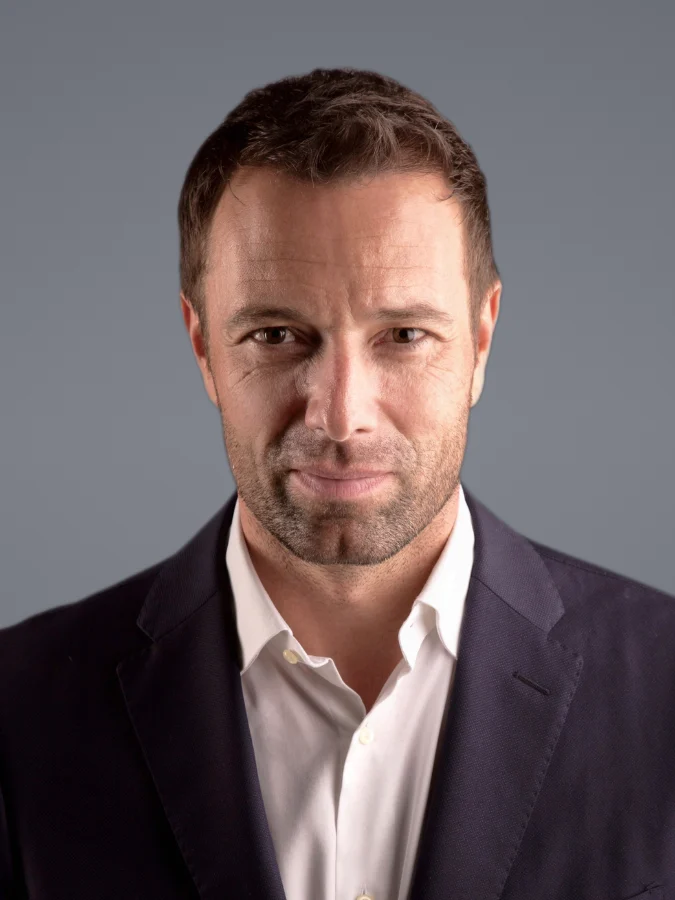
Günther Niederhofer
Business and IT transformation, operating models and executive advisory
Günther brings the profile of a transformation executive with over 20 years of international experience to the connection of business, IT and AI. He has led large transformation programmes at Telefónica (B2B CRM/OSS/BSS), Munich Airport (S/4HANA pre-project with 30+ stakeholders), Dubai Airports (corporate development portfolio, €40M CAPEX/OPEX), IDnow (CRM/ERP stabilisation in SaaS growth) and du Telecom (Customer Excellence build-up) – and in several cases taken on operational line responsibility as interim executive.
His spectrum ranges from ERP/CRM transformation (S/4HANA, Salesforce, MS Dynamics) through IT operating models, outsourcing and process digitisation to C-level advisory and adoption. AI is not a tacked-on trend here, but integral to his current consulting approach – AI tools, AI agents, data infrastructure are explicit fields of his practice.
MBA from the University of Innsbruck with an exchange year in Glasgow, plus methodical depth (PMP, MSP, Scrum Master, Lean Six Sigma, ITIL V3) as a foundation for complex programme steering.
What this means for you
Günther takes over where individual initiatives need to become a viable target picture, clear prioritisation and a working operating model. He translates between management, business and IT – and makes sure transformation does not end at strategy papers but arrives in organisation, governance and operational reality. For larger programmes involving ERP/CRM or interim responsibility, he is the natural partner.
Full spectrum
From the S/4HANA programme through the operating model to interim-COO responsibility – management consulting that takes AI seriously and understands operational reality.
„Complexity is not proof of substance. Simplify, automate, decide clearly – and make sure strategy actually lands in the organisation."
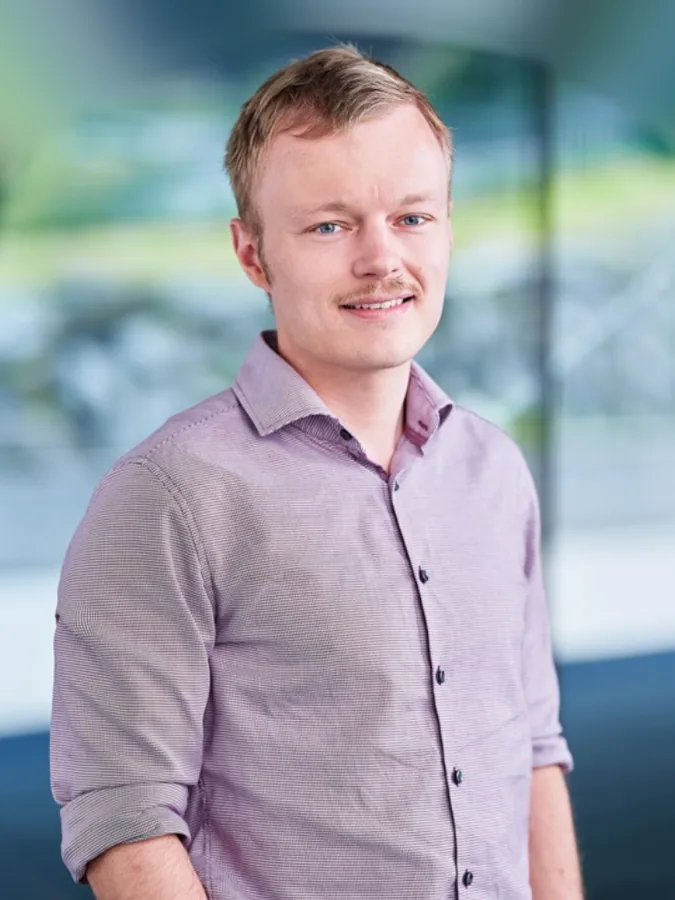
Lukas Brexler
Process management, lean management and facilitating change initiatives
For Lukas, improving processes does not mean analysing workflows from the outside and prescribing solutions. It means bringing people together, making different perspectives visible and developing a better way forward together.
For more than ten years he has worked at the intersection of production, logistics, lean management and process management. What fascinates him most is working with interdisciplinary teams: where different experiences meet, the most effective improvements often emerge.
Today, as a manager at a mid-sized mechanical engineering company, he leads change and optimisation initiatives across the entire organisation. A particular focus of his work is designing and facilitating workshops in which teams analyse their processes, identify potential and develop concrete improvements. His aim is not only to optimise processes, but to enable the organisation, step by step, to drive improvement on its own.
He does not see process management as an end in itself, but as the foundation for developing organisations. Clear responsibilities, transparent workflows and a shared understanding of processes create the conditions for standardisation, digitalisation and the targeted use of new technologies.
With the growing use of artificial intelligence, this perspective matters more than ever. AI can only unfold its potential where processes are understood, described and under control. Automating inefficient or unclear workflows often scales existing problems. Effective process management is therefore the necessary foundation for integrating digital solutions and AI applications into organisations sustainably and in a way that creates value.
What this means for you
Lukas steps in where workflows first need to be understood and shaped together before automation or AI can sensibly start. He facilitates the workshops in which your teams analyse and improve their own processes – so AI builds on a solid foundation instead of scaling existing problems.
Full spectrum
For him, process management is far more than describing workflows. It is a tool for strengthening collaboration, creating transparency and supporting people as they shape their work together.
„Artificial intelligence does not deliver its value in processes that are documented, but in processes that are understood, designed and lived."